
Loading...
Odessa Insulation is the insulation contractor Abilene, TX property owners call for commercial insulation, residential attic upgrades, and spray foam work in Taylor County homes and buildings.
We have served West Texas since 2022, respond to every inquiry within one business day, and provide written estimates before any work begins, with no obligation.
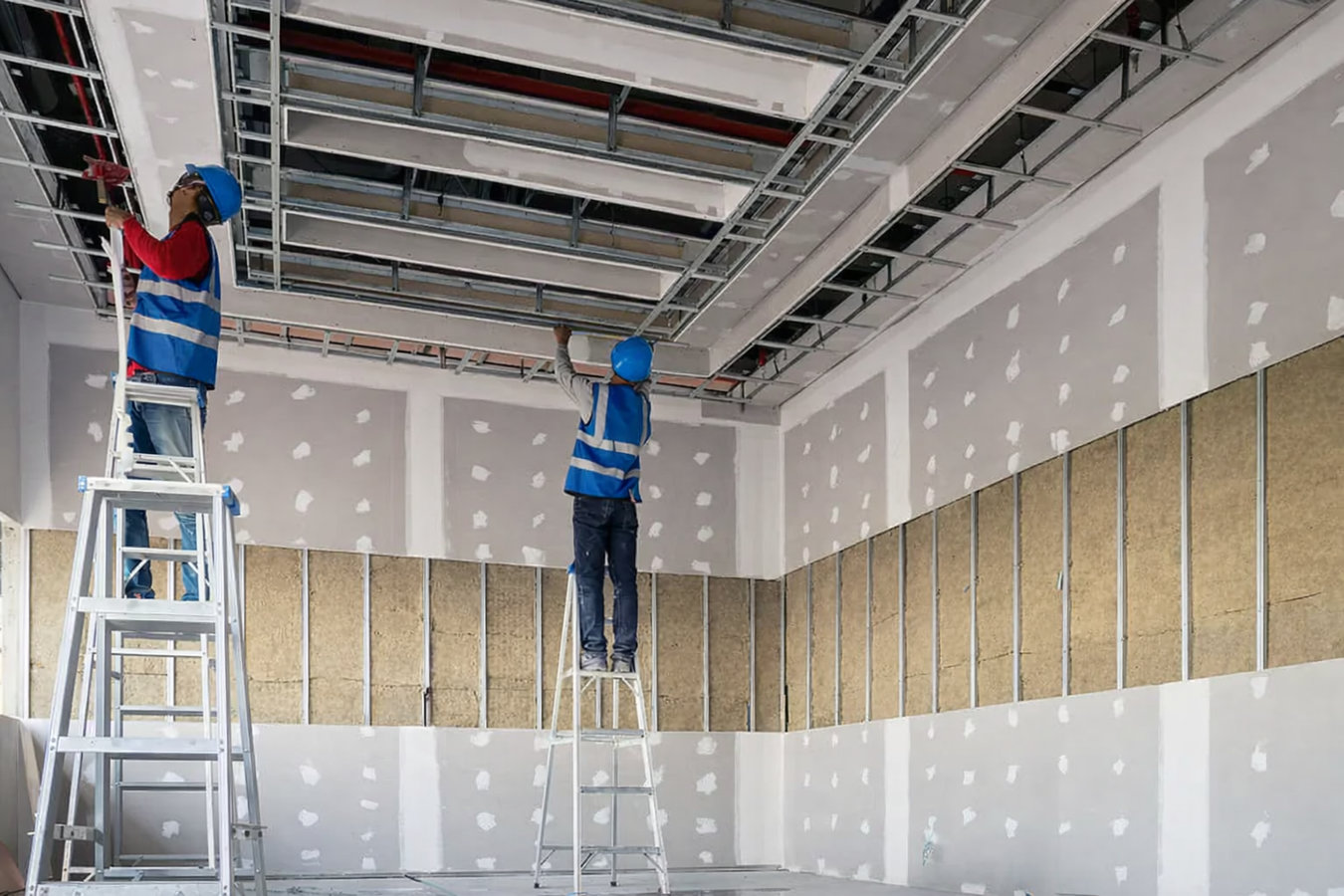
Abilene has a substantial commercial base anchored by Dyess Air Force Base, three universities, and a healthcare sector centered around Shannon Medical Center, and many of those properties occupy older buildings that were not built with today's energy standards. Warehouses, office suites, and mixed-use buildings built during the city's post-war decades often have minimal insulation in the roof assembly or walls, and the result shows up directly on summer utility bills. We bring the same assessment-first approach to commercial properties that we apply to residential work. Read more about what commercial insulation involves and what to expect during and after a project.
Abilene summers bring average July highs above 95°F and sustained stretches above 100°F through June and August. For the brick ranch homes that dominate Taylor County neighborhoods, the attic is the primary entry point for that heat into the living space below. A significant portion of Abilene's housing was built before 1980 and has insulation that has been compressing and degrading for decades. Upgrading the attic is the single most effective way to reduce cooling costs for most Abilene homeowners, and it is where we start the majority of our residential projects here.
Abilene's expansive clay soils shift slab foundations with every wet-dry cycle, and that movement opens gaps around top plates, utility penetrations, and the framing junctions of older brick ranch homes. Spray foam fills those irregular voids completely, bonding directly to the surfaces it contacts and hardening into a permanent layer that does not sag or compress over time. For Abilene homes where standard insulation has already been tried and bills have not improved, spray foam applied at the air leakage points is often what finally makes a measurable difference.
Abilene gets more than 2,500 hours of sunshine per year and persistent wind that pushes outdoor air through gaps no one can see from inside the house. In pre-1980 construction, those gaps exist around recessed lights, electrical boxes, plumbing stacks, and the top plates of exterior walls. Air sealing those locations before adding insulation is what determines whether an upgrade translates into lower bills or just adds material on top of unresolved leakage. We assess and seal before recommending any insulation product.
A large portion of Abilene's housing stock was built in the 1950s and 1960s and has never had the original insulation replaced. Retrofit work brings these homes up to a modern thermal standard without requiring demolition, working through the attic and any accessible wall cavities while the residents stay in place. For Abilene homeowners who have been putting off an insulation upgrade because they were not sure what was involved, this is typically the most practical and least disruptive path forward.
For Abilene attics where adding depth is the goal and demolition is not on the table, blown-in loose-fill insulation is one of the most cost-effective options available. The material installs quickly over existing surfaces, covers irregular framing and obstructions that batts cannot reach, and is particularly well-suited to the wide, open attic decks common in Abilene's ranch-style homes. When combined with attic air sealing, it delivers a measurable improvement in how evenly the house holds its temperature during the long summer cooling season.
Abilene sits in Taylor County in West Texas and receives over 2,500 hours of sunshine per year, with a summer cooling season that stretches from May through September. The National Weather Service climate data for Abilene shows average July highs consistently above 95°F, with multiple multi-week stretches above 100°F most summers. That sustained heat load means a building's insulation is working against a large temperature differential for months at a time, and any degradation in performance shows up directly on the utility bill.
The dominant housing type across Abilene is the single-story brick ranch on a slab foundation, most of them built between the 1950s and 1980s. Brick exteriors are durable and low-maintenance, but they provide almost no thermal resistance on their own, so the entire job of slowing heat transfer falls on whatever is in the wall cavities and above the ceiling. In many Abilene homes, that material is decades old and has compressed to a fraction of its original R-value. The expansive clay soils documented by the USDA Natural Resources Conservation Service in this area also move slab foundations with every wet and dry cycle, opening gaps in the building envelope that compound the energy loss from degraded insulation.
Abilene also has a significant commercial building stock tied to Dyess Air Force Base, three universities, and a large healthcare sector. Many of those properties occupy older buildings that were built for function rather than efficiency. The same principles apply to commercial buildings as to residences: insulation that was adequate in 1970 is not meeting today's energy demands, and the cost difference shows up in every monthly utility statement.
Our crew has worked in Abilene and Taylor County since 2022, and the homes we encounter most often here are the single-story brick ranch houses that were built across the city during the 1950s through the 1970s. Abilene is one of the larger cities in our service territory, with about 125,000 residents and residential neighborhoods that range from early post-war streets near downtown to newer subdivisions on the north and east sides. For projects that require a permit, we coordinate directly with the City of Abilene Development Services department so homeowners do not have to manage that process themselves.
Abilene is straightforward to navigate. US Highway 83/84 is the main north-south corridor, and Interstate 20 runs through the south side of the city and connects to our Odessa base to the west. Dyess Air Force Base occupies the southwest corner of the city, and the neighborhoods surrounding it are a mix of military family housing and established civilian homes. We also work regularly in the areas around Abilene Christian University on the north side, where a concentration of older rental and owner-occupied homes on the same streets creates steady demand for insulation upgrades and air sealing work.
Abilene is the eastern anchor of our West Texas service corridor. Homeowners in Sweetwater to the west and San Angelo to the south are both within our regular service range, with the same crew, pricing, and written estimates you get in Abilene.
Tell us what is prompting your call: high summer bills, a building that cannot hold its temperature, or a property you know has never had the insulation upgraded. We respond within one business day and schedule a free on-site visit at a time that works for you, with no drive-out fees for Abilene addresses.
A technician inspects your attic, checks for air leaks around fixtures and penetrations, and evaluates any crawl space or commercial roof assembly areas. We explain what we find in plain terms, confirm whether a permit is required for your project, and provide a written quote specifying material type, coverage area, and total cost before any work is scheduled. No charge for the assessment, no pressure to commit.
The crew arrives with equipment matched to your project, whether that is a blowing machine for loose-fill attic work or spray foam rigs for targeted sealing. Most residential attic jobs are completed the same day. Commercial projects vary by building size, but the crew works around your schedule to minimize disruption to operations where possible.
Before leaving, the crew walks you through the completed work, confirms coverage, and answers any questions about what was installed and where. If a permit was required, we coordinate the city inspection on your behalf and provide documentation of the materials and R-values installed for your records.
We serve Abilene and Taylor County with free on-site estimates for residential and commercial properties, no drive-out fees, and a written quote before any work begins.
(432) 280-0156Abilene is the county seat of Taylor County and the largest city in a wide stretch of West Texas, with a population of about 125,000 residents. The city's economy runs on three main pillars: the military presence at Dyess Air Force Base, a well-established university sector that includes Abilene Christian University, Hardin-Simmons University, and McMurry University, and a healthcare industry anchored by Shannon Medical Center. That combination creates a steady mix of long-term homeowners, military families rotating through the area, and students and faculty associated with the universities. The Frontier Texas! museum in downtown Abilene is one of the more recognizable landmarks in the city, drawing both residents and visitors to the downtown corridor.
The housing stock in Abilene is dominated by single-story brick ranch homes on concrete slab foundations, most of them built between the 1950s and the 1980s. Neighborhoods near downtown and around the university campuses contain some of the oldest homes in the city, while newer subdivisions extend outward on the north, east, and south sides. All of the postwar brick construction in Abilene shares the same characteristic: brick exteriors that provide visual durability but almost no thermal resistance, placing the full insulation burden on the materials installed in the attic and wall cavities. According to census data, about 55 percent of Abilene households are owner-occupied, which means the majority of residents have a direct financial stake in how efficiently their homes perform.
We serve the full Abilene metro and the surrounding Taylor County area from our base in Odessa. Sweetwater to the west along I-20 and San Angelo to the south are both part of our regular service area, with the same crew, pricing, and written estimates you get in Abilene.
Spray foam creates an airtight seal that dramatically reduces energy loss.
Learn moreOld or damaged insulation is safely removed to prepare for a fresh install.
Learn moreInsulating the crawl space stops moisture and cold from entering your home.
Learn moreAir sealing closes the gaps that let conditioned air escape unnoticed.
Learn moreClosed-cell foam provides the highest R-value per inch available.
Learn moreOpen-cell foam is a flexible, cost-effective option for interior walls.
Learn moreSealing attic bypasses prevents the stack effect that drives up utility bills.
Learn moreA vapor barrier blocks ground moisture from rising into your home.
Learn moreProfessional vapor barrier installation protects your structure long-term.
Learn moreCommercial-grade insulation solutions for businesses, offices, and facilities.
Learn moreServing these cities and communities.
Odessa Insulation provides free on-site estimates for residential and commercial properties in Abilene and across Taylor County, with written quotes and no drive-out fees.