
Loading...
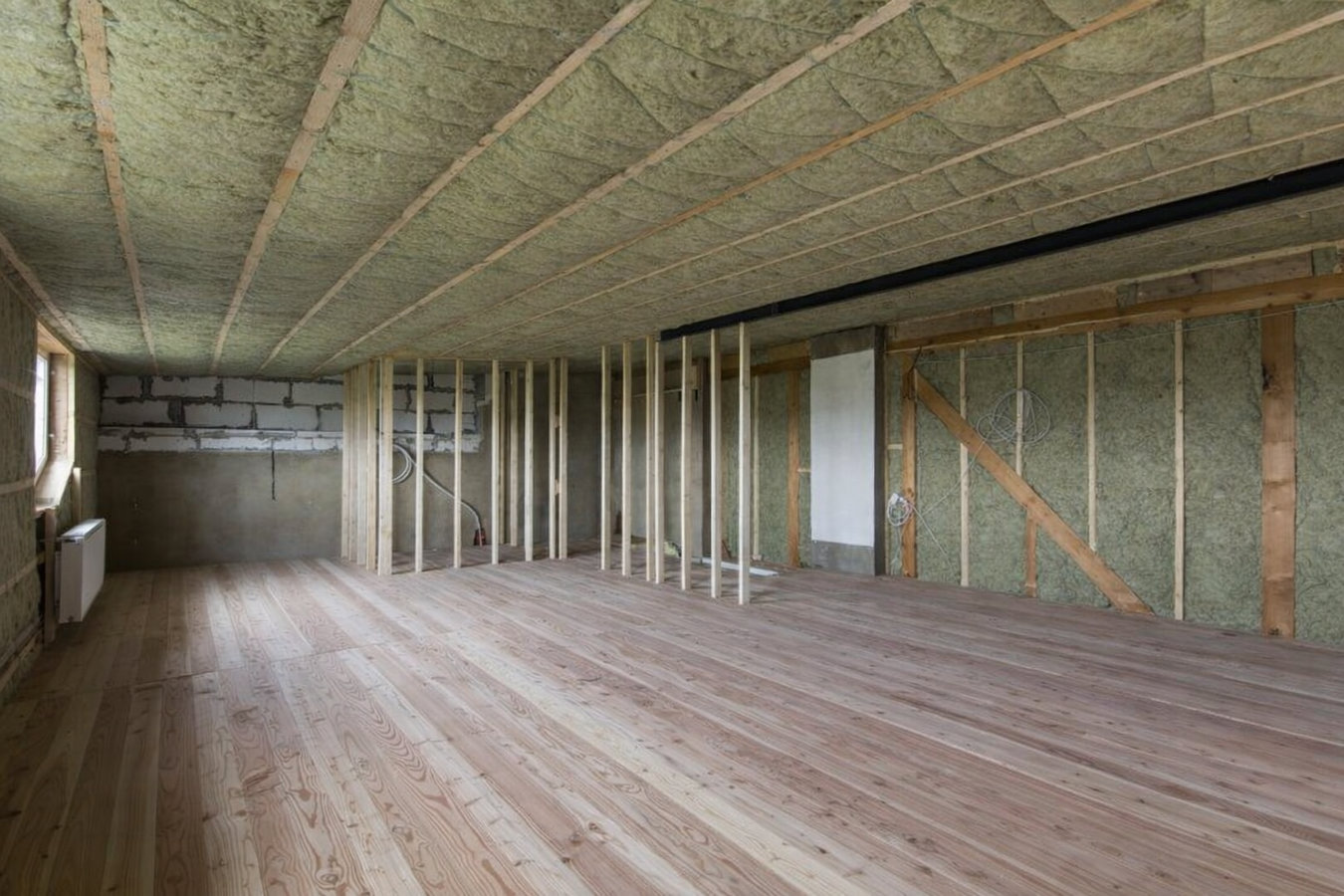
Your basement is one of the biggest pathways for summer heat to enter your home. We seal and insulate it so your AC stops fighting the ground beneath your feet.
Basement insulation in Odessa slows heat from entering your living space through your foundation walls and rim joist - most jobs are completed in one to two days and immediately reduce the load on your air conditioner throughout the long West Texas cooling season.
Most Odessa homes are built on concrete slabs or have shallow below-grade spaces rather than full basements, but any below-grade or semi-below-grade space is a thermal liability if it is uninsulated. If your cooling bills feel out of proportion to your home size, heat entering through your foundation is one of the first places to look. Pairing basement insulation with vapor barrier installation addresses both heat and moisture at the same time.
The U.S. Department of Energy notes that the rim joist - the band of wood sitting on top of your foundation - is one of the most common points where conditioned air leaks out of a home. Sealing and insulating the rim joist often delivers a noticeable improvement on its own.
If your cooling costs jump from May through September and your thermostat settings have not changed, heat is likely entering through an under-insulated basement or crawl space. In Odessa's climate, where 100-degree days are routine, an uninsulated below-grade space acts almost like a heat collector sitting directly under your living area.
Walk barefoot across your first floor on a hot afternoon. If the floor feels warm or the room above your basement is consistently harder to cool than the rest of the house, heat is conducting upward through an uninsulated floor system. This is one of the most direct signs that your basement's thermal boundary needs attention.
White powdery residue on concrete walls is a sign that moisture is moving through the foundation. A musty smell is another indicator. Both suggest a moisture situation that needs evaluation before insulation goes in - and they are also signs that any existing insulation may already be compromised.
Homes built in Odessa during the mid-20th century oil boom were rarely insulated below grade. If you have never had the basement or crawl space inspected and the home is more than 40 years old, there is a good chance you are losing conditioned air through an uninsulated foundation every single day.
Our basement insulation work starts with the rim joist - the wood band that runs along the top of your foundation. Sealing and insulating this area with spray foam is one of the most cost-effective improvements available to an Odessa homeowner because it addresses both air leakage and heat transfer in a single pass. For homes with accessible below-grade walls, we also insulate interior wall surfaces with rigid board, batt, or spray foam depending on what the space requires.
For homeowners dealing with moisture concerns alongside the insulation question, vapor barrier installation is typically done at the same time or as a prerequisite. If the below-grade space has existing insulation that is damaged, deteriorated, or pest-contaminated, closed-cell foam insulation is often the right replacement because it seals and insulates in one application while resisting future moisture intrusion.
Every project includes an assessment for moisture before material goes in. We will not insulate over a moisture problem - that is how hidden mold starts.
Best for homes where conditioned air is leaking out along the foundation-to-framing connection - one of the highest-payoff targets in any older Odessa home.
Suited to homes with an accessible below-grade space where interior wall surfaces can be insulated to slow summer heat transfer into the living area above.
Ideal when you want insulation and air sealing done simultaneously, or when the space has irregular surfaces where rigid board or batts would leave gaps.
The right combination for below-grade spaces where moisture management is as important as thermal performance.
Odessa sits in the Permian Basin, where summer temperatures routinely exceed 100 degrees and the cooling season runs from late April through October. That is more than six months of your air conditioner fighting to maintain a livable temperature. An uninsulated below-grade space is essentially a heat collector sitting directly under your living area during every one of those months. The houses most affected are the brick-veneer ranch homes built during the 1950s through 1980s oil boom years - homes that were constructed with little or no insulation in below-grade spaces and have never been updated.
Odessa is also built on caliche - a hard, calcium-rich soil that expands and contracts with moisture changes. That movement can open small gaps in foundation framing over the years, creating pathways for both heat and the fine dust that rolls in off the Permian Basin during windstorms. Homeowners near central Odessa and Midland who have older homes frequently report that their floors feel warm in summer and that dust accumulates faster than it should - both are signs of a poorly sealed foundation.
The February 2021 winter storm is also worth noting. Many Odessa homes came out of that event with gaps in insulation and damage they may not have fully addressed. If your home went through that storm and you have noticed uneven temperatures since, the basement or crawl space is one of the first areas worth inspecting. We also serve homeowners in Andrews and the broader Permian Basin where the same soil and climate conditions apply.
We will respond within one business day. We will ask about your basement size, any moisture history, and what is prompting the call - this helps us show up prepared.
A contractor walks your basement and checks the walls, floor, rim joist, and any existing insulation. We look for moisture, gaps, and pest damage. This visit typically takes 30 to 60 minutes, and we explain what we find before we leave.
You receive a written quote that breaks down work scope, materials, and total cost. We recommend comparing two or three quotes - not just on price, but on what each contractor includes for air sealing and moisture prep.
Most standard Odessa basement jobs are completed in one full day. Before the crew leaves, we walk you through the finished work so you can see exactly what was done and ask any questions.
We respond within one business day. No obligation, no pressure - just a straight assessment of what your basement needs.
(432) 280-0156Before any material goes in, we evaluate your basement for signs of caliche soil moisture and water intrusion. Insulating over a hidden moisture problem is one of the most common and costly mistakes in this market - we do not do it.
We pull permits when required by the City of Odessa and document the scope on every job. That paper trail protects you legally and financially, and it is something a lot of out-of-town crews skip entirely.
We work on homes across the Permian Basin, including the brick-veneer ranch homes built during Odessa's 1950s through 1980s growth decades. We know how these homes perform and what upgrades make the biggest difference here.
You get a full written quote itemizing scope and materials before a single piece of equipment is unloaded. No verbal estimates, no surprise add-ons once work begins.
The combination of proper moisture assessment, documented work, and familiarity with Permian Basin housing conditions is what separates a long-term fix from a temporary patch. The North American Insulation Manufacturers Association publishes installation guidelines that define what correct work looks like - we follow them on every job. When you are ready, call us or submit a request and we will set up a no-obligation walkthrough.
A rigid, moisture-resistant spray foam option that seals and insulates your basement walls or rim joist in a single application.
Learn moreControls ground moisture in below-grade spaces - often paired with basement insulation to protect both the material and your home's structure.
Learn moreOdessa's cooling season is long - the sooner your foundation is sealed, the sooner you start saving on every electric bill this summer.