
Loading...
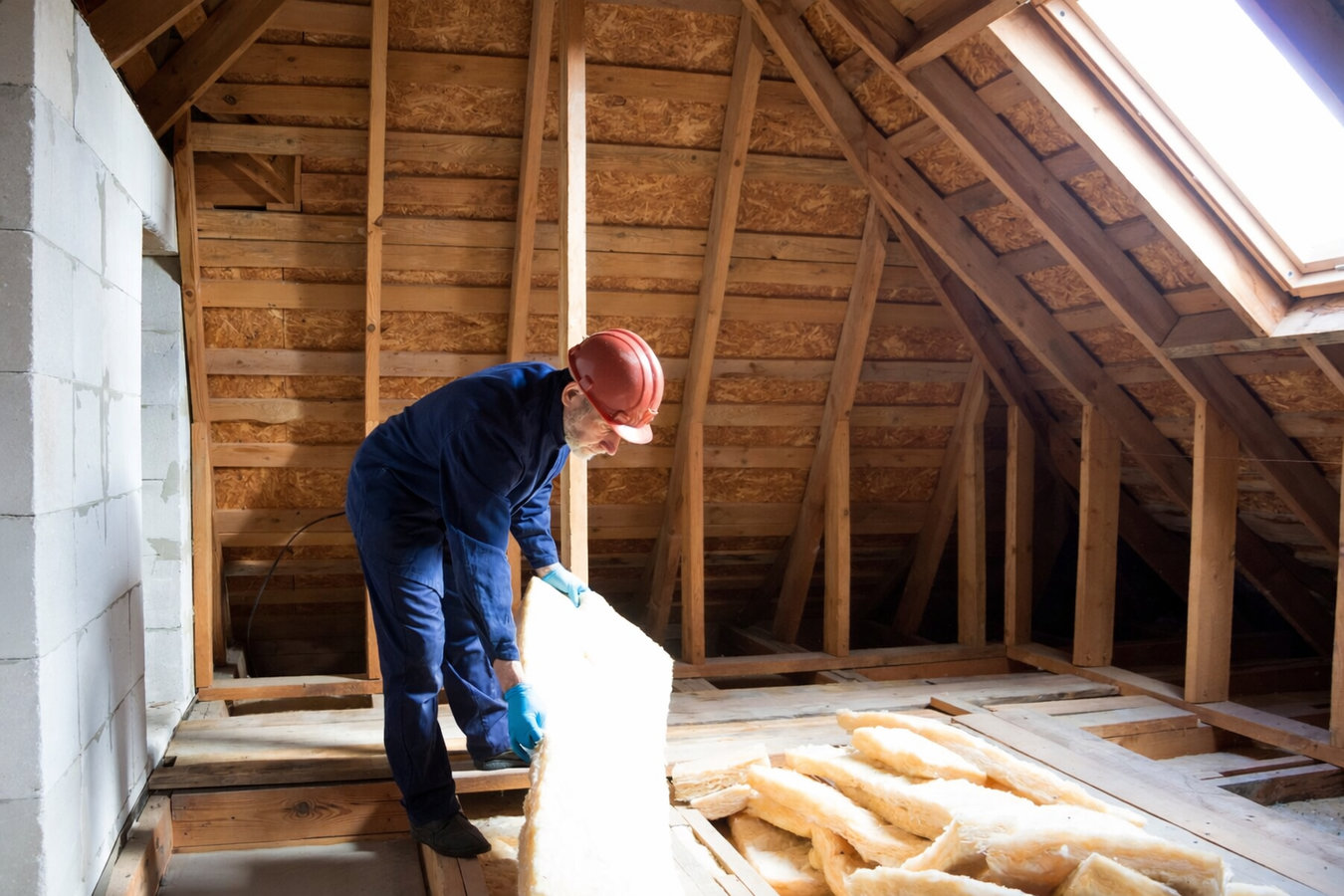
Your attic floor is full of gaps that let cooled air escape and hot, dusty outside air in. We seal every one of them - and test before and after to prove it.
Attic air sealing in Odessa means finding every gap, crack, and opening in your attic floor and closing them with foam, caulk, or rigid blocking - most standard jobs for a single-story ranch home are complete in two to five hours, with no curing period that disrupts your day.
Insulation slows heat transfer, but it cannot stop air from moving through gaps. If your attic floor has unsealed holes around light fixtures, plumbing pipes, and wiring penetrations, your conditioned air bypasses the insulation entirely and escapes into the attic. In Odessa, where the cooling season runs from April through October, those leaks translate directly into higher electric bills and rooms that never hold temperature.
Attic air sealing delivers the most value when it is done before adding or upgrading insulation. Pairing it with whole-home air sealing services addresses every level of the home in one project, closing the pathways that heat and Permian Basin dust use to enter your living space.
If your air conditioner seems to run without stopping during Odessa summers but the house never reaches the temperature you set, air leaking from the living space into the attic is one of the most common causes. A leaky attic can overwhelm even a properly sized AC unit - and if your system is less than ten years old and still struggling, air sealing is worth investigating before assuming the equipment is the problem.
If you see a ring of dust or grime around a ceiling light or ceiling fan, air is moving through that fixture from the attic above. Odessa's persistent wind and dust storms push outdoor air through every gap they can find. That discoloration around fixtures is one of the clearest visible signs that your attic floor has unsealed gaps that need to be addressed.
When a specific bedroom or hallway stays noticeably warmer than the rest of the house in summer, it often means that area has more air leakage above it. Heat from the attic is effectively pouring in through gaps in the ceiling plane above that space. This is especially common in rooms at the end of a hallway or directly under the hottest part of the roof.
Homes built in Odessa before 1990 were constructed under energy standards that did not require air sealing at all. If you have lived in your home for years and no one has ever looked at the attic from an energy standpoint, the attic floor has almost certainly never been sealed. The gaps around every pipe, wire, and light fixture have been there since the house was built.
A thorough attic air sealing job starts with a blower door test - a temporary fan sealed into your front door that depressurizes the house and makes leaks measurable. We use this to establish a baseline before any work begins, so you can see the actual improvement afterward rather than taking our word for it. Not every contractor takes this step, but skipping it means the job cannot be verified.
The sealing work covers every penetration in the attic floor: gaps around recessed lights, plumbing stacks, electrical conduits, HVAC supply and return boxes, and the tops of interior partition walls where they meet the attic. We use the right material for each type of opening - foam for small gaps, caulk for cracks, and rigid blocking for larger framing voids. This is also the right time to address the attic before pairing the work with crawl space vapor barrier service for a whole-envelope approach, or to combine it with insulation upgrades through our air sealing services program.
After sealing, we run a second blower door test so you have a real before-and-after number. That measurement is your evidence that the job was done thoroughly - not a subjective assessment.
For homeowners who want a measured baseline and proof-of-work after the sealing is complete.
Foam, caulk, and rigid blocking at every gap - recessed lights, pipes, wiring, partition walls.
Suits homeowners adding new attic insulation who want to ensure the insulation actually performs as specified.
For Odessa's ranch-style and mid-century homes with shallow attic spaces that require specialized access.
Odessa has one of the longest cooling seasons in the country - air conditioners run from April through October in most years, under outdoor temperatures that regularly top 100 degrees. The Electric Reliability Council of Texas has flagged the Permian Basin as an area of high residential energy demand. When your attic is leaking conditioned air, your system runs longer and harder during the months when electricity costs the most. Sealing the attic is one of the most cost-effective ways to reduce that load before the next summer billing cycle begins.
The flat, open terrain around Odessa means persistent wind, and the fine Permian Basin dust that comes with it does not stop at your front door. The same gaps that let conditioned air escape let wind-driven dust enter. Homeowners in Monahans, Pecos, and Andrews face the same issue. Sealing the attic floor reduces one of the main infiltration pathways, and many homeowners notice the dust improvement before they notice the difference on their electric bill.
Odessa's housing stock compounds the problem. A large share of homes were built during the oil boom decades of the 1950s through 1980s, when air tightness was not part of the building code. Low-pitch rooflines common in Odessa's ranch-style homes also create shallow attic spaces that are harder to work in - but not impossible. Booking in fall or winter, when attic temperatures drop below working limits, gives contractors the time to be thorough. The U.S. Department of Energy estimates that air sealing and insulation together can cut heating and cooling costs by up to 15 percent - a meaningful number in a city with electric bills that spike every summer.
We respond within one business day to schedule your free estimate. When you call, we will ask your home's square footage, when it was built, and whether any insulation work has been done before - this helps us estimate scope and whether specialized equipment is needed for a low-clearance attic.
Before any work is quoted, we inspect the attic to see what we are working with. We assess the number of penetrations, access conditions, and existing insulation. If you want a measured baseline, we perform a blower door test at this stage - it gives you a concrete number for your home's air leakage rate before anything is sealed.
You receive a written estimate covering all work to be done and the total cost. We do not start until you have approved it in writing. The price you agree to is the price you pay - there are no add-ons for work that was always part of the job.
The crew works across the attic floor, sealing every penetration with the appropriate material. A typical Odessa ranch home takes two to five hours. When the work is done, we rerun the blower door test so you can see the measured improvement - a real before-and-after number, not an estimate.
Free estimate, blower door testing available, no obligation until you approve the quote.
(432) 280-0156We test air leakage before we start and again after we finish. This gives you a real number - not an estimate - showing how much the work reduced your home's air loss. Most contractors skip this step. We include it because it holds us accountable to a measurable standard.
We cover Odessa and eleven surrounding cities across the Permian Basin, from Midland and Andrews to Monahans and Pecos. That reach means we understand the specific housing stock and climate conditions that affect attic performance across the region - not a one-size approach applied everywhere.
We provide a written estimate upfront and document the scope before any work begins. Checking our verifiable local reviews and past Odessa jobs takes only a few minutes and confirms you are working with a crew that stands behind the results it delivers.
Many Odessa ranch homes have shallow attic spaces that not every crew can work in effectively. We have the equipment and experience to seal low-pitch attics thoroughly, reaching the corners and partition tops where most of the leakage occurs - not just the easy spots near the hatch.
When you combine documented work, blower door accountability, and genuine experience working in Odessa's low-pitch housing stock, you get a contractor who can show you the results - not just describe them. The ENERGY STAR Seal and Insulate program outlines the standard that proper attic air sealing should meet, and we use it as our benchmark on every job.
Close the moisture and air pathways at the base of your home to complement the sealing work done above.
Learn moreExtend the same diagnostic and sealing approach to your crawl space, walls, and utility penetrations throughout the home.
Learn moreAttic temperatures top 140 degrees by June - book in fall or winter while we can work thoroughly and get the job done right.